

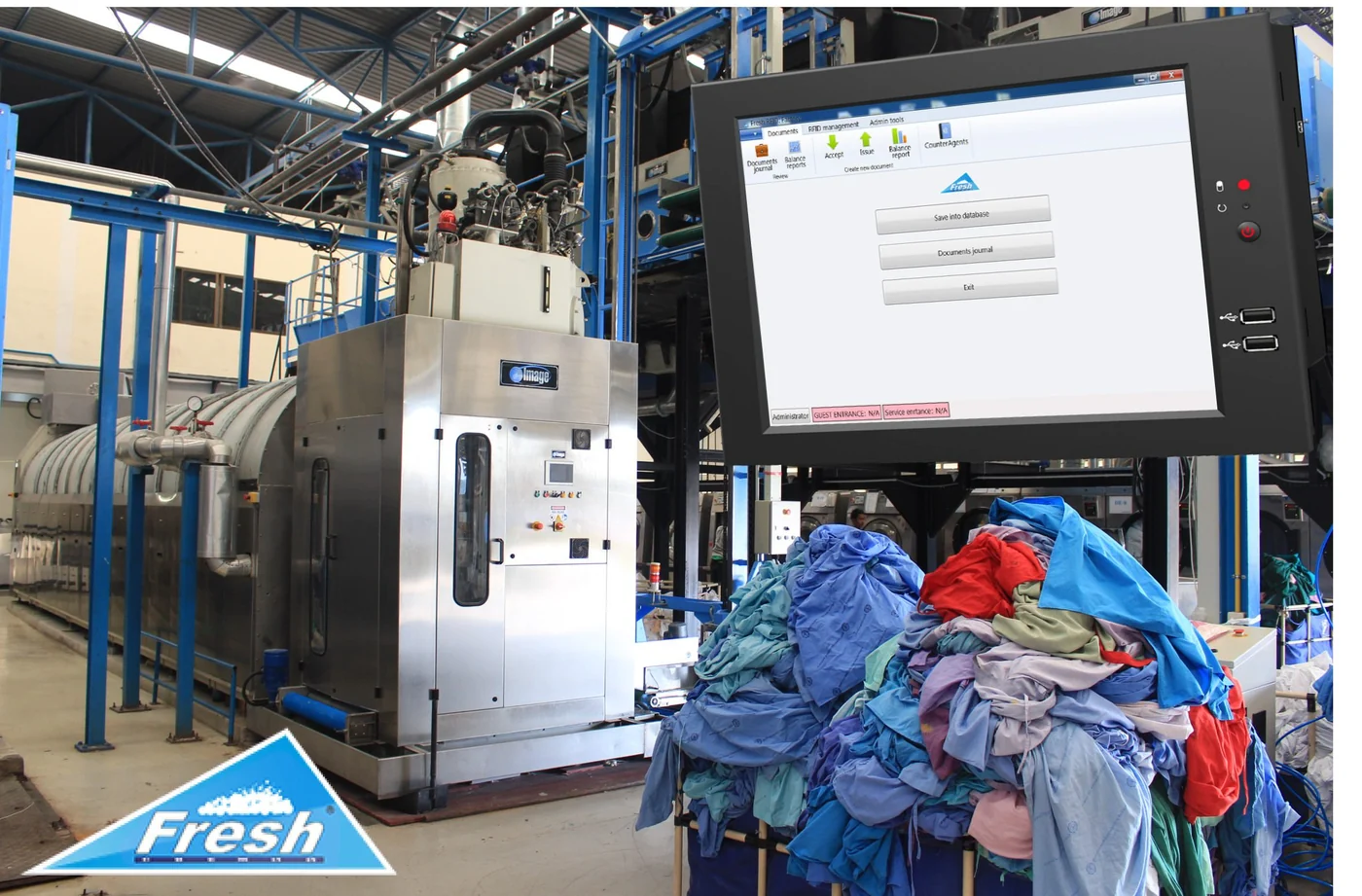
Textile Rental Laundry Workflow should be planned around the real workflow. A textile rental laundry is not only a wash process. It is a circulation business. Items leave the plant, go into service, return soiled, move through sorting and processing, and then become clean stock again before delivery. Because of that loop, the planning questions are broader than washer and dryer capacity alone. The site also needs clear stock visibility, predictable staging, and a practical method to understand where shortages or delays occur.
This page is designed for managers and planners who want a simple workflow map before deciding on software, readers, storage, or additional automation.
Basic loop of a textile rental operation
- Return / intake: soiled items come back from customers and are received into the plant.
- Sorting: items are separated by type, customer, condition, or process requirement.
- Processing: washing, drying, finishing, or tunnel processing returns them toward usable stock.
- Clean stock: processed items are counted, stored, and prepared for the next delivery cycle.
- Delivery / issue: items leave the plant and the cycle begins again.
Where visibility matters most
Many textile rental problems are not true production failures. They are visibility failures. The plant may not know whether a shortage happened at intake, during sorting, while in process, or in clean stock. It may also be difficult to separate a temporary imbalance from a real item loss. This is where software, checkpoints, handheld counts, or better storage logic become useful. They help management compare what should be present with what is actually present at each stage.
Plan the handoff points
Every stage where items change custody or status is important: receiving, wash staging, dryer output, finishing, clean stock, pack-out, and delivery. If the plant defines these handoff points clearly, it becomes much easier to decide whether it needs simple counts, software events, or item-level tracking.
The main objective is not to collect data for its own sake. It is to make shortage investigation and stock planning faster and more reliable.
Frequently asked questions
Is this guide only for very large plants?
No. The same workflow logic helps medium-size plants as well. The scale changes, but the handoff points are similar.
Do I need item-level identity?
Not always. Some operations begin with zone or batch visibility and add finer control later if the business case is clear.
Should I choose software or equipment first?
Usually map the workflow first. Then decide whether the main problem is production capacity, stock visibility, or both.
What information should I send for help?
Describe the item types, daily or weekly volume, current process stages, and where shortages or delays are most visible.
Continue planning
Laundry Software & Textile Tracking
See when visibility tools support the rental workflow.
Industrial Tunnel Laundry System
Look at high-volume processing logic.
Equipment for Laundry
Review the supporting equipment groups around the workflow.
Textile Inventory Guide
Compare inventory and search approaches for textiles.
Textile Rental Laundry Workflow: project inputs to define first
Before comparing equipment, document item type, quantity, issue point, return point, storage, laundry handoff, monitored exits and the staff response when an exception occurs. The purpose of this step is to turn a broad idea into an operating requirement that can be tested. A quotation is much easier to compare when every option is measured against the same workflow instead of against a different marketing claim.
For textile rental laundry workflow, write down who uses the system, what a normal successful event looks like, what should happen when something is denied or missing, and who is responsible for maintaining users, items or settings after installation. These details reduce surprises during commissioning and help keep the first phase appropriately simple.
- Define the normal operating sequence from start to finish.
- List the physical dimensions or capacity limits that affect the project.
- Separate must-have functions from features that can wait for a later phase.
- Identify the staff member or team responsible for day-to-day administration.
- Decide what information must be recorded and what can remain standalone.
- Write a short acceptance test before equipment is ordered.
Test the real workflow before full rollout
Before full deployment, test normal issue, normal return, missing items, authorized removal, busy periods, laundry transfers and the way staff resolve an exception without slowing normal users. A useful test is based on the actual site and representative users or items. It should confirm not only that the equipment works, but that the entire operating sequence is understandable and repeatable for the people who will use it every day.
A well-defined textile rental laundry workflow setup should be tested with representative users, items and normal exception cases before full rollout. Record the working settings, physical positions and staff steps that produced the accepted result. That baseline is valuable later when equipment is moved, expanded or serviced.
Measure the result and keep expansion simple
After launch, review return rate, unresolved shortages, stock accuracy, replenishment effort and how quickly staff can investigate a missing item. The first objective is to confirm that the original operating problem improved. If the process is already working, expansion should add a specific missing capability rather than complexity for its own sake.
Documenting this workflow makes training, troubleshooting and future expansion easier. A later phase may add software, more control points, additional storage, reports or integrations, but those additions should build on a workflow that already works reliably.
For related planning material, continue to the towel and textile guides. Keeping related pages connected also helps staff and buyers move from a broad planning question to the specific system they actually need.
Planning questions
Should the first phase include every possible feature?
No. Start with the functions required to solve the current operating problem. Add optional reporting, additional zones or integrations when there is a clear reason for them.
What information is most useful before requesting a quote?
Send site dimensions, representative photos, approximate volume, the normal workflow, the exception you want to control and any existing equipment that the new system must work with.
How should future expansion be handled?
Keep the original acceptance criteria and working settings. Expand from that baseline so new hardware or software adds a defined function without replacing parts that are already doing their job.