





HOW TO PREVENT TOWEL THEFT
Towel Theft Prevention Planning should be planned around the real workflow. Preventing towel theft starts with removing easy opportunities and making return simple. Technology is most useful after the facility understands where towels disappear and which control can change that part of the workflow. A practical towel theft prevention planning workflow begins by mapping issue, use, return, storage and the point where exceptions occur.
Towel Theft Prevention Planning: Combine policy, layout and technology
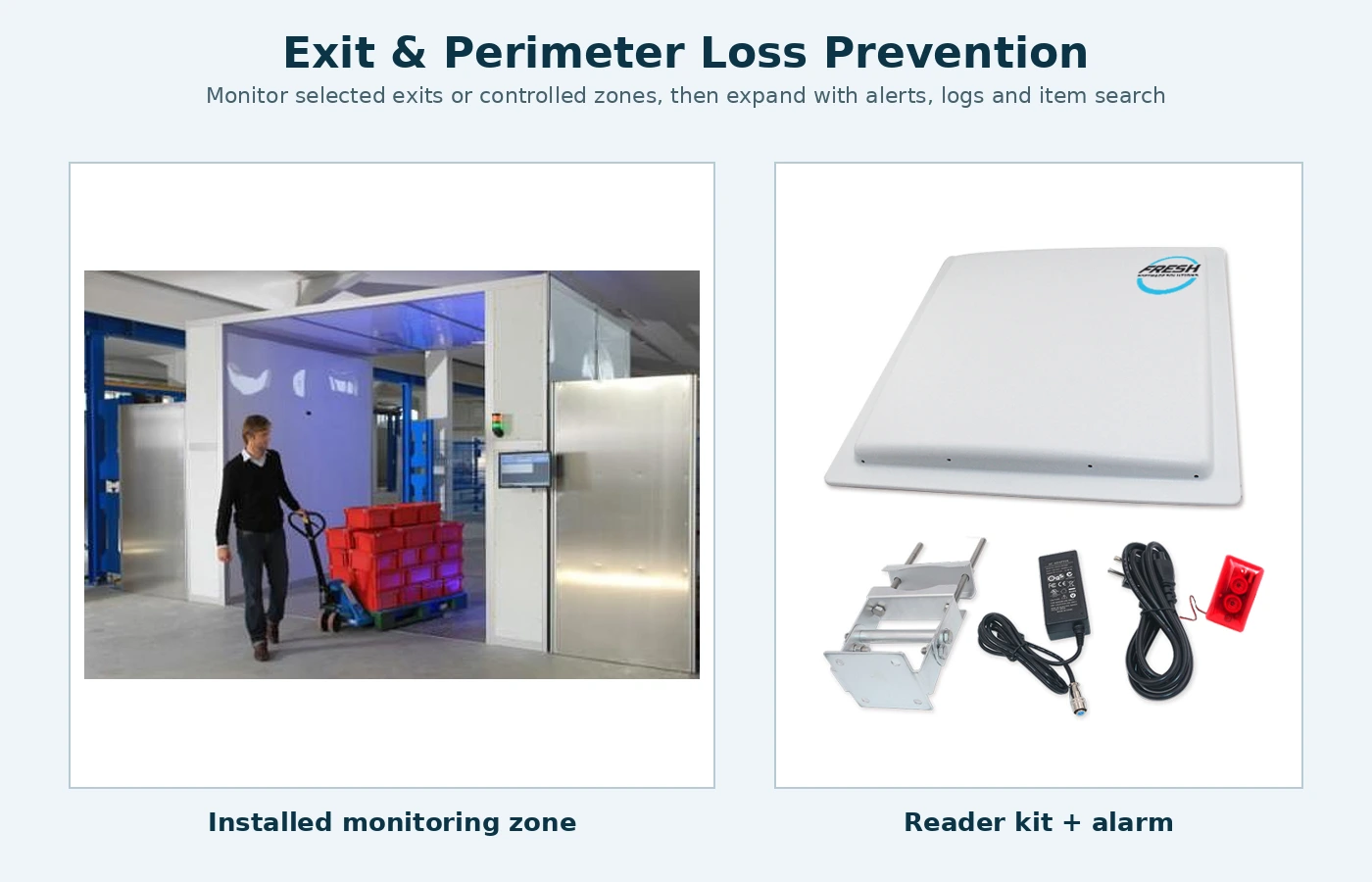
Clear towel-return locations, reasonable issue limits and staff routines often reduce loss before advanced equipment is added. Where loss still occurs through a known exit, fixed monitoring can create an immediate alert. Where unlimited pickup is the problem, a controlled cabinet may be more appropriate. Where management simply cannot explain stock, inventory may be the first priority.
Find the loss point before adding technology
Count where towels are available, where they are issued, where used towels are returned and where unexplained losses appear. A facility that loses towels from an uncontrolled pool deck has a different problem from a hotel that has poor room-to-laundry reconciliation. The control should be placed at the step that creates the loss, not simply at the easiest doorway to wire.
- Establish a starting inventory.
- Separate clean stock from used returns.
- Identify uncontrolled exits or transfer points.
- Record how often replenishment happens.
- Define who investigates a shortage.
Prevention should match the facility type
A gym may connect towel use to member access. A pool may focus on deck exits and return stations. A hotel may need different controls for rooms, spa, fitness and pool areas. Copying one layout across all three can create unnecessary equipment and miss the actual loss route.
Use the simplest control that changes behavior
Some sites need only a local exit alarm. Others benefit more from controlled towel issue, inventory counts, event records or staff notification. A larger system is not automatically better. Start with the control that directly addresses the observed loss pattern, then add software or additional readers if the data shows a reason.
Measure the result with operating numbers
Track towel cost per member visit, pool admission or occupied room when that operating data is available. This normalizes the result and makes it easier to see whether loss is improving rather than simply changing with business volume.
Common reasons towel-loss projects underperform
- No reliable baseline before the system is installed.
- Staff are unsure what to do when an alarm or discrepancy occurs.
- Clean and used towels are mixed in the same operational count.
- The protected exit is not the actual route where most loss occurs.
- Technology is added without fixing an easy uncontrolled pickup or return process.
- The project promises “zero loss” instead of setting a measurable reduction target.
What to send for a recommendation
Describe the facility type, approximate towel quantity, number of clean issue points, used-towel return points and exits where towels can leave. Include photos or dimensions of the suspected loss point and explain whether you need only a local alarm, inventory, controlled dispensing or event history. This lets the first proposal stay focused on the real problem.
Related planning guides
A practical commissioning example
Prevention works best when the facility first removes easy opportunities. A pile of clean towels near an uncontrolled exit and a return bin hidden around a corner create a different risk than a controlled issue desk with good returns. Walk the space as a guest would and note where taking an extra towel is effortless and where returning one is inconvenient. These observations often reveal simple layout changes that should be made before electronic monitoring is evaluated.
How to validate the workflow before full rollout
After improving layout or policy, measure the same period again. If a specific exit still accounts for loss, test monitoring there. If losses instead correlate with unrestricted pickup, test controlled issue. Keep a small log of interventions so management understands whether the control changes behavior or merely creates alerts. The project should be judged by reduced unexplained loss, not by the number of technology events.
Decisions to make before ordering
- What easy opportunity for loss can be removed without technology?
- Is the main failure at pickup, return, inventory or exit?
- What guest experience must be preserved?
- Which control can be piloted without changing the whole facility?
- How will replacement purchases be compared with usage volume?
Write these answers into the project scope before comparing equipment. They create an acceptance target for the installer and a training reference for the employees who will use the system later. If one of the answers changes, update the scope before adding hardware so the installation continues to solve the operating problem described on this page.
Project handover and future expansion
For how to prevent towel theft in gyms, pools and hotels, keep a short handover record with the final layout, equipment locations, naming convention, normal operating steps and the person responsible for routine changes. Record the settings that were proven during acceptance instead of relying on memory. This makes later service, staff training and expansion much easier.
Expansion should follow a new operational requirement: another entrance, a larger inventory, additional reports, a new department or a need for remote visibility. Add the smallest component that solves that new requirement while preserving the working first phase. A modular project is valuable because the original installation remains useful rather than becoming a disposable pilot.
Frequently asked questions
Can technology completely eliminate towel theft?
No system should be presented as guaranteeing zero loss. The goal is to reduce preventable loss and improve accountability.
Can a system work without a computer?
A compatible standalone exit-monitoring configuration can provide local detection and alarm without a continuously connected PC.
Should every door be monitored?
Usually not. Start with the exits or workflow points that actually create risk.
Is a smart towel cabinet always the best way to prevent theft?
No. It is useful when controlled issue is the main need. Exit monitoring or better inventory can be more appropriate for other loss patterns.